Inkwards
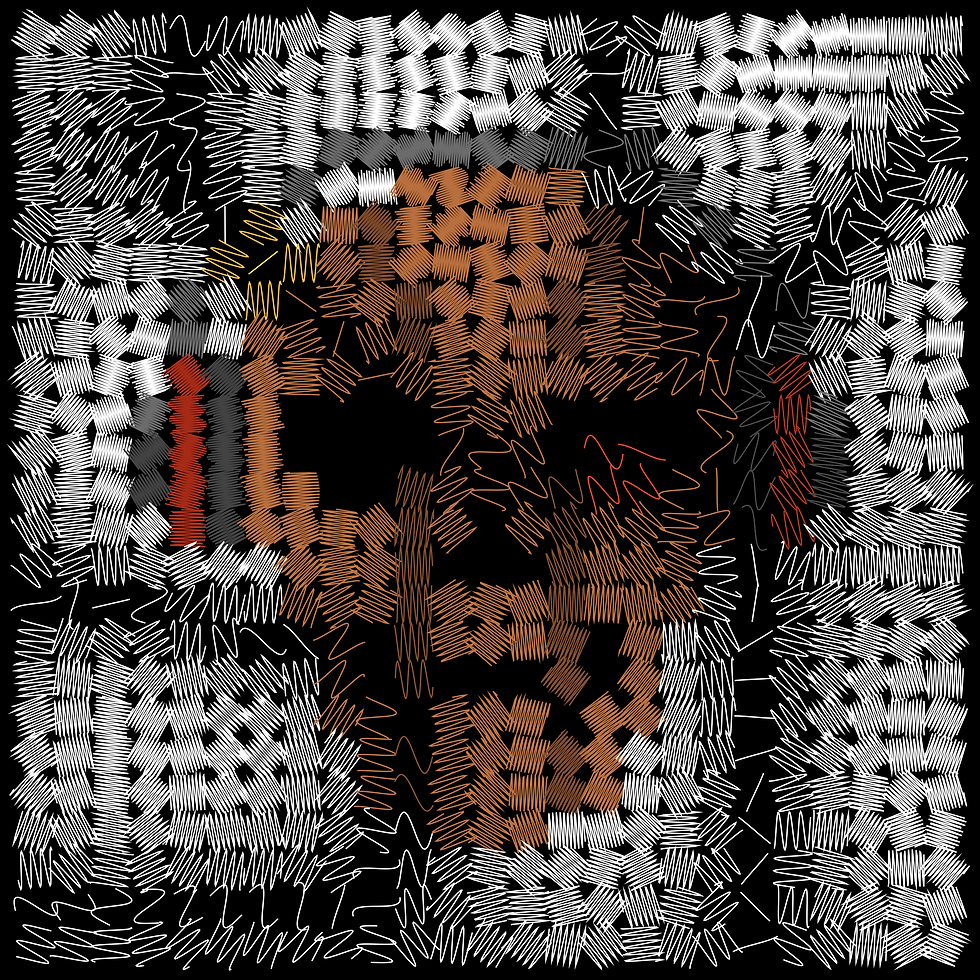
Inkwards is a collection of 10,000 unique algorithmic artworks combining two separate systems: colour (characters) and geometry (waveforms). It is our first collection of this scale, in fact, it is our most complex algorithm to date, or rather, a series of algorithms.
Almost everything around us in our daily lives is either rectangular or solid. We wanted to move away from that and focus on space, creating not by defining solid objects, but by giving a sense of color and form. This is the art in which we’ve managed to bring together two things we particularly love, the universe and masks/helmets.
The waveforms we have used most widely in this collection are magnetic and sound waveforms, or rather, we use fragments of waveforms, or, as we use to call them, fragments of reality, and yes, in practice, waveforms with similar patterns can be found in almost any field that describes social and economic life both quantitatively and qualitatively, however, magnetic and sound waveforms possess physical properties.
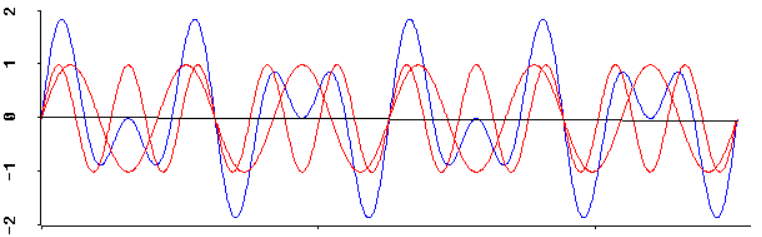

Whilst waveforms are most commonly displayed horizontally or vertically, we have focused on the real properties of magnetic and sound waveforms, with directions ranging from 0 to 2π.
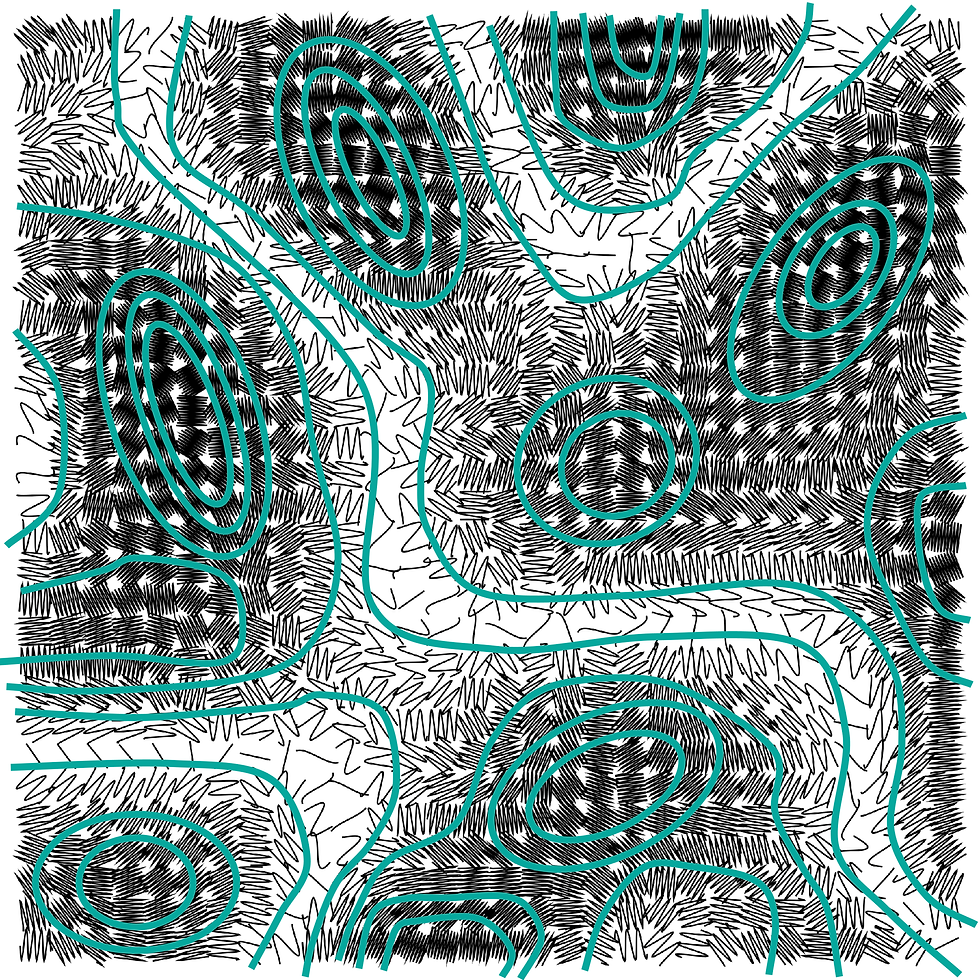
The geometry of the waveforms is simple, the complexity comes from the interaction of many waveform fragments in space, following the pattern of noise and flow. Put simply, the first layer of noise creates a gradual variation in space, allowing neighbouring waveforms to develop related orientations, whilst the second layer of noise gives them their curvature. Thus, each waveform becomes a trajectory situated within a directional field, a battle between order and randomness. We designed this algorithm to have a mathematical character similar to the way directional fields appear in nature, such as the structures produced by magnetic fields and magnetised plasma, where local directions can vary continuously whilst a large-scale structure emerges in space.
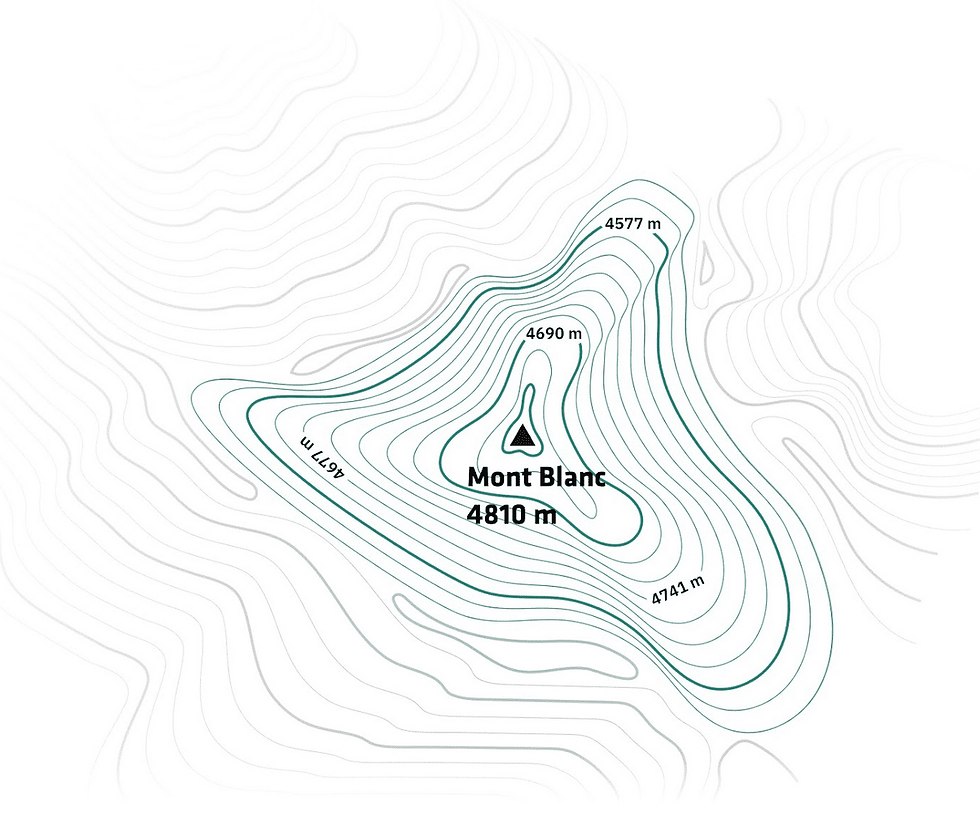
Visually, we get a 3D structure, like waves, on a 2D plane, this structure has patterns similar to those on topographical maps (relief) and isobaric maps (weather), or, if we build a linear map of sea/ocean waves, we get the same patterns.
For each waveform, the colour is defined individually, and the colour neither dictates nor influences the geometry of the spatial structure in any way. For the characters, we used the soil tones of each planet in our solar system as a base, and special colors for some characters and traits.
At different scales, the same composition can reveal different structures, from a greater distance you can clearly see the character, closer up, you see the waviness structure, and even closer, you see the imperfections of the character and the relief of the plane. Just as in society it is common for everyone to wear masks, and to see someone’s true self we must look more closely. We are happy that we have managed to reflect this metaphor in Inkwards.
That’s how we came up with this design and structure for Inkwards. We will not explain here what Inkwards is as art. Art doesn’t need explaining, our goal is actually the opposite, something algorithmic and abstract that speaks for itself. It is exactly as you see and understand it.